
When to Seek Treatment
When is the best time to treat?
The best window for treatment is 4-12 months. It is important to have your baby evaluated as soon as possible. This will ensure the best outcomes for your baby.
What happens if I choose not to treat?
There is no link to skull shape and brain development. However, several issues have been linked to skull deformities. A misshapen skull can lead to irregularities of the inner ear as well as the jaw and palate. Skull deformities can also shift the eye sockets causing issues with vision.
The Treatment Process

Scan
We digitally measure your baby’s head.

Fabrication
We make the helmet!

Fitting
Your baby gets the helmet.
Evaluation
We check to see if your baby has a need for a helmet.

Evaluation
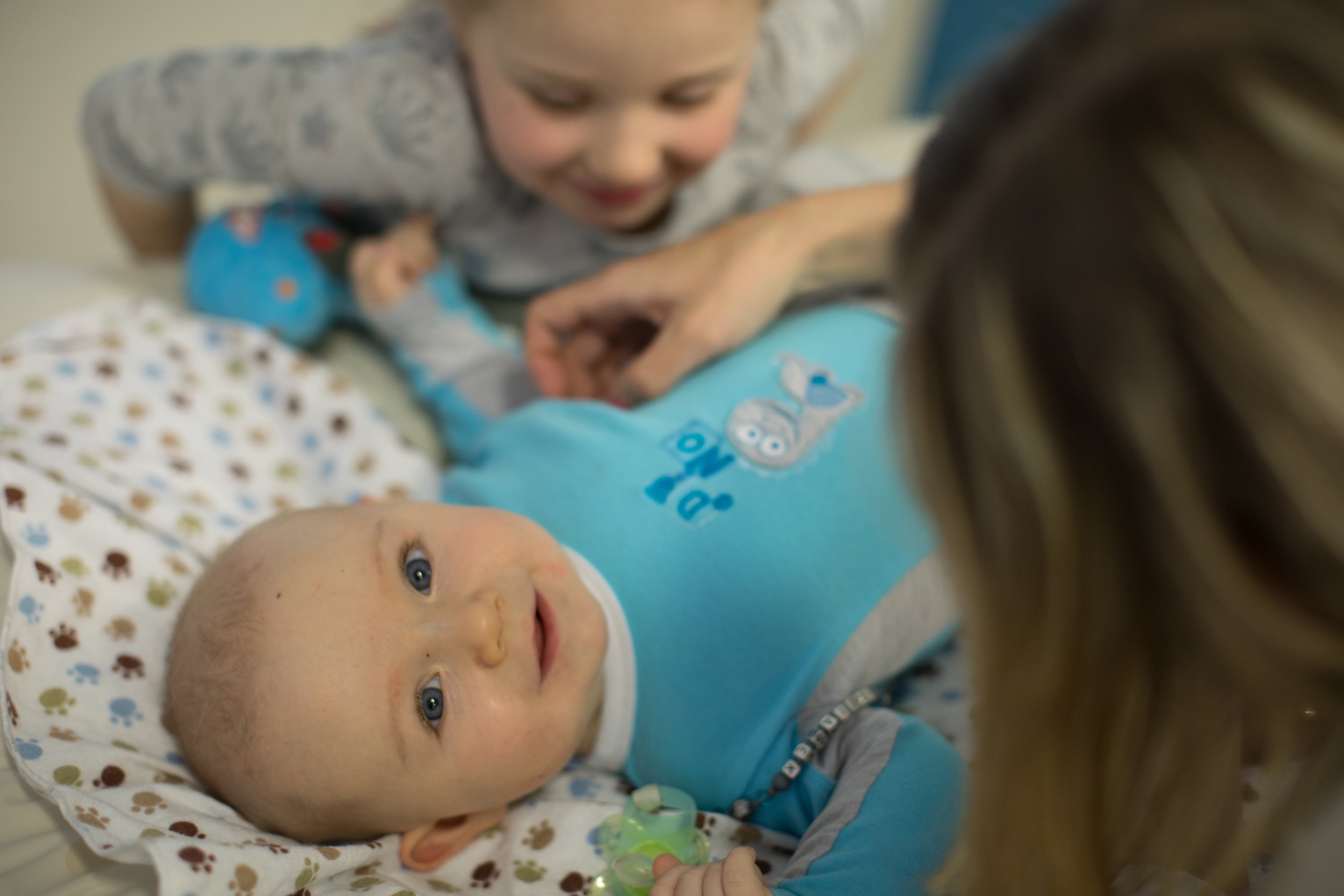
Evaluating your baby’s head is the first step.
Recognizing head shape irregularities such as plagiocephaly or brachcephaly by the parents or a treating physician is the beginning of the process.
We offer virtual consultations to help you determine if your baby may be a candidate for a helmet.
Scan and Evaluate Head Shape
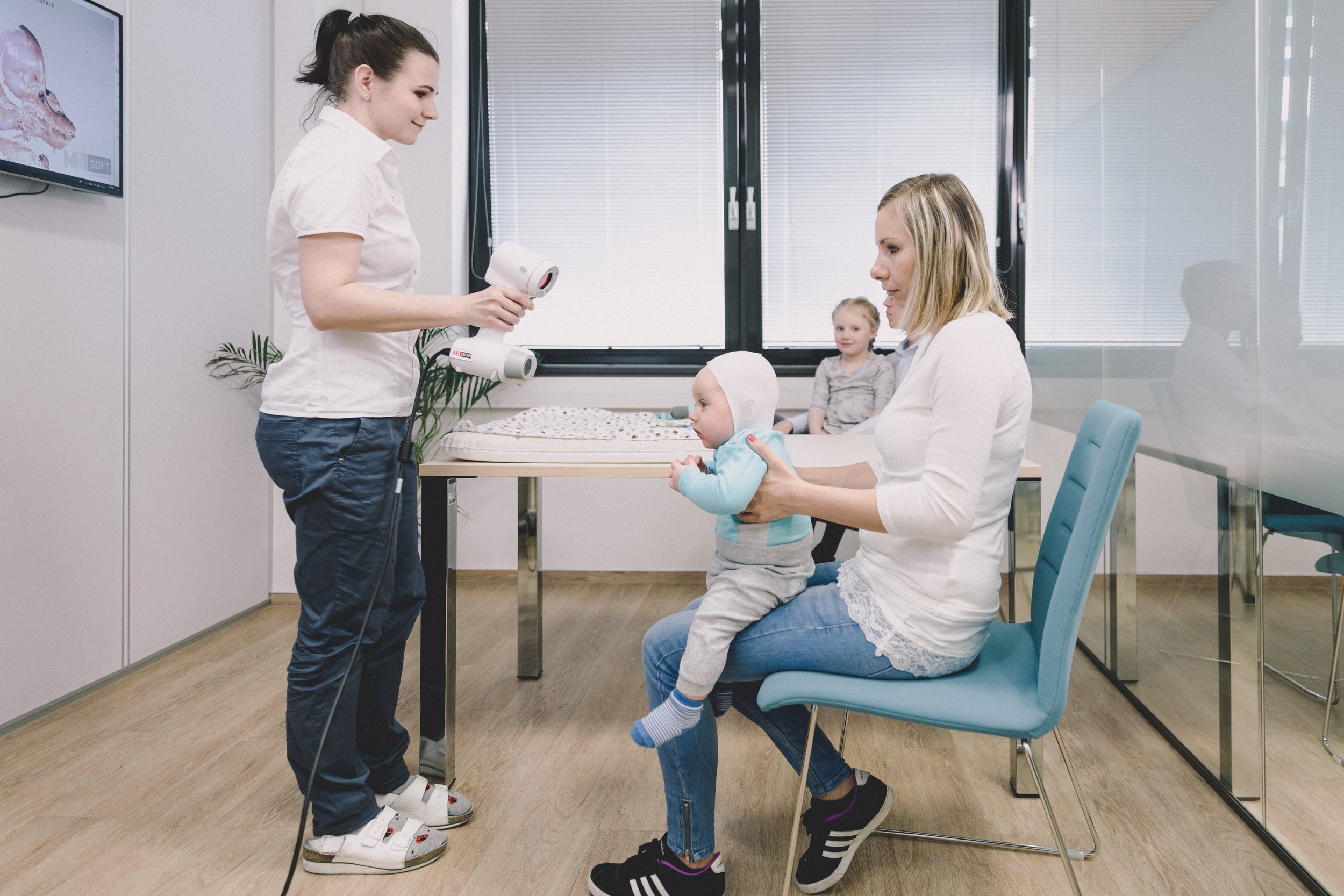
We will scan your baby with an FDA approved white light scanner, which is completely safe to use near a baby. Digital scanning is vastly more accurate than photographic imaging. Our scanners are accurate to .001mm. This level of accuracy is key to obtaining a good model of your baby’s head shape.
Then, the scan of the baby’s head is uploaded and reviewed with you using a proprietary measurement program that will assess your baby’s head shape and measure the asymmetries of their head.
Fabrication
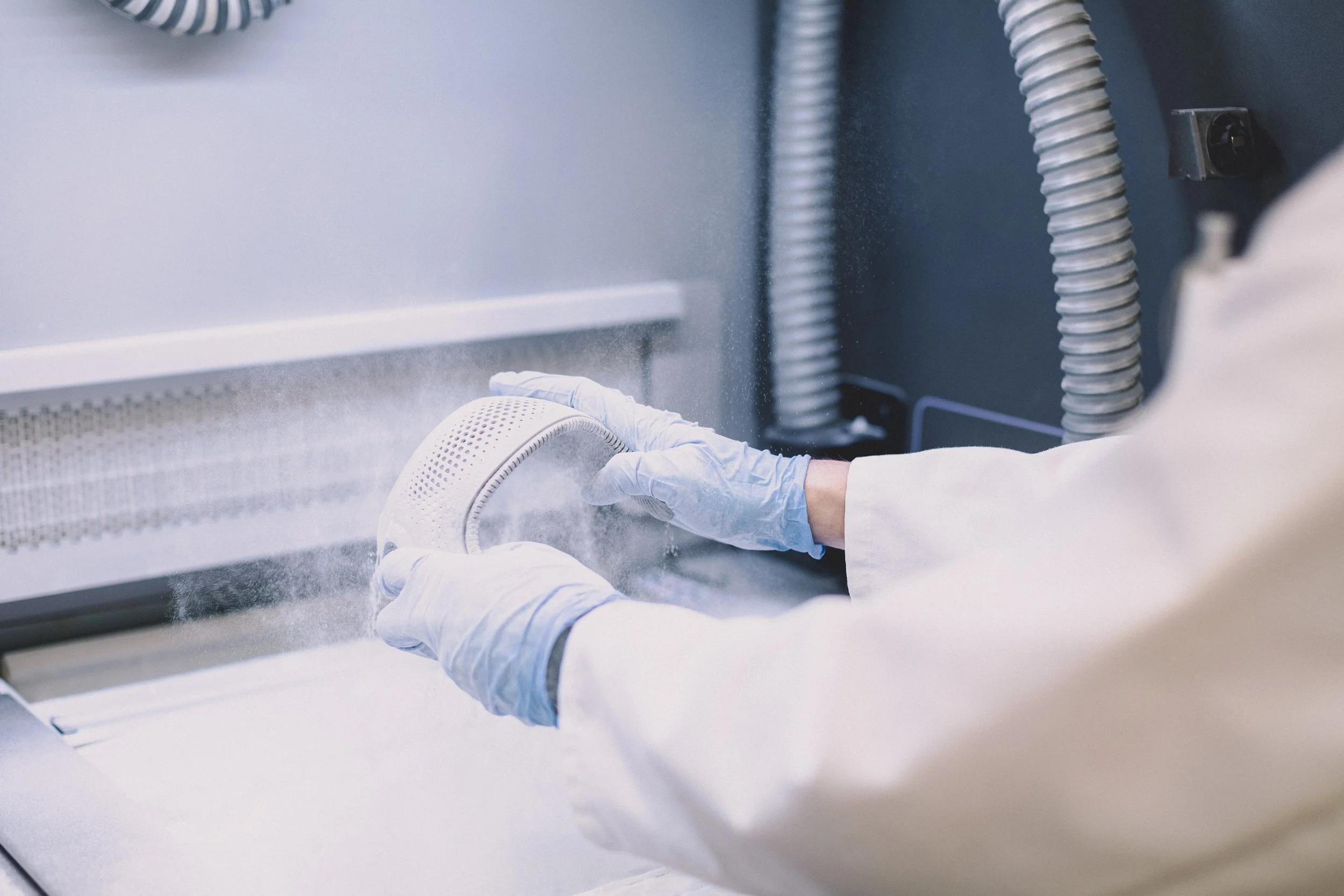
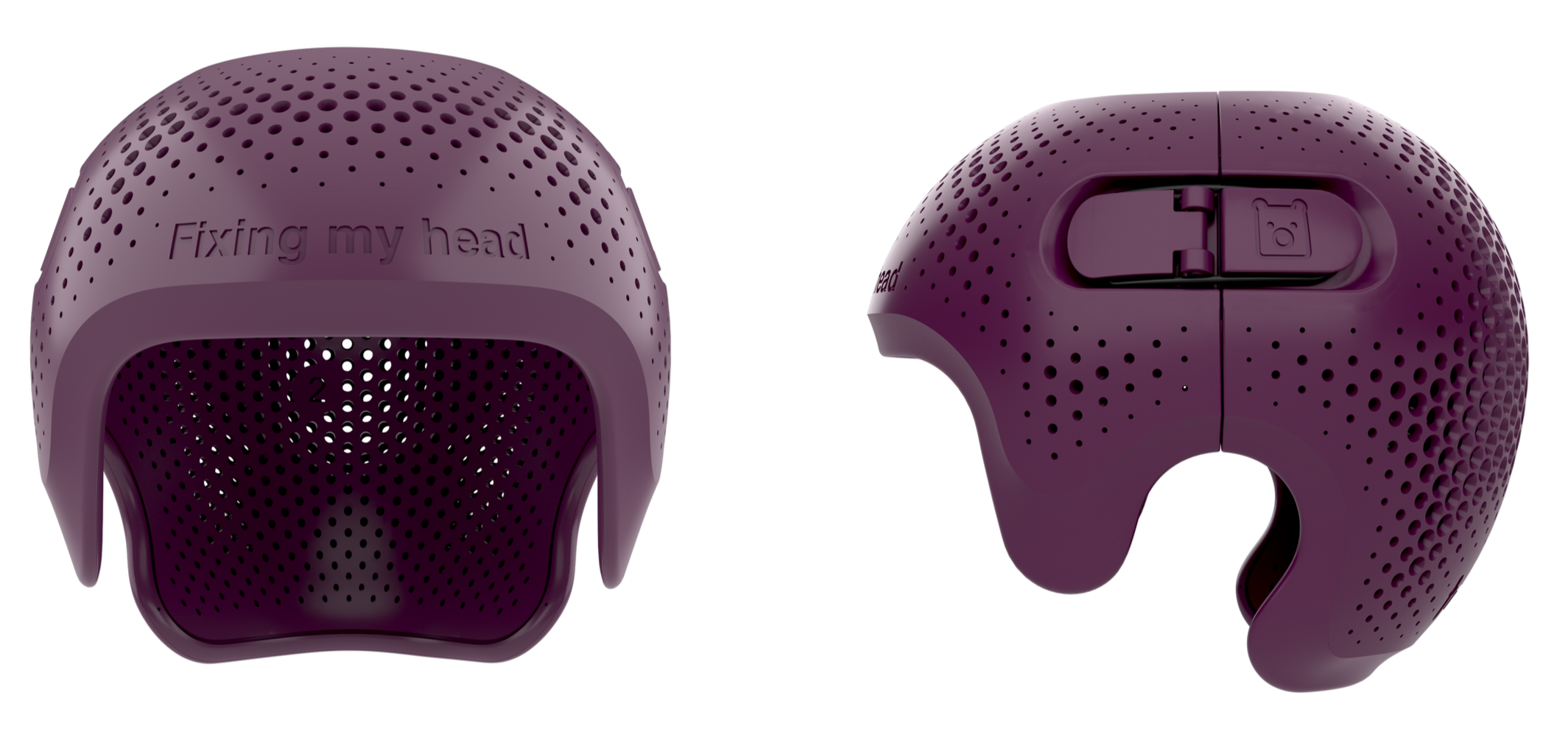
Each helmet is custom made for each baby. A well- fitted helmet is necessary for an optimal outcome.
There are options to customize the helmet, including color selection and adding text to be printed into the helmet.
3D printing is more precise than traditional fabrication methods and ensures a properly-fitted helmet.
This process takes 2 weeks from scanning.
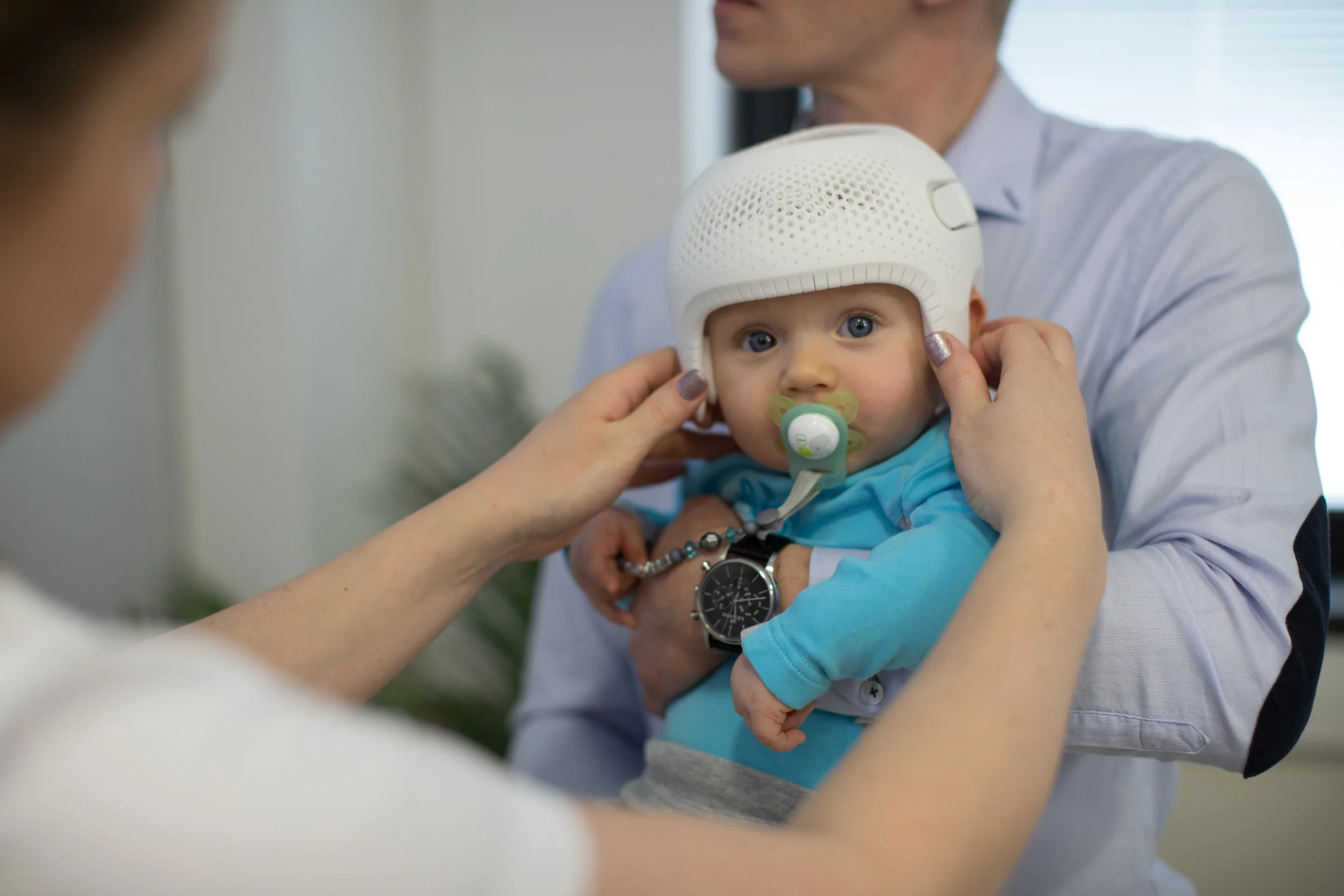
Fitting and Adjustment
Your baby will be fit with a custom helmet by a certified clinician to ensure proper fit and function.
Follow up appointments are key to a successful head shape!
We offer virtual follow up appointments to reduce the amount of times you have to come to our office.
We will also periodically scan your baby’s head during treatment to track progress and compare with previous head shapes.
Financial Options
How much a helmet costs depends on several factors, such as which insurance your baby is covered by or would you self pay.
We are in network with most insurances and will verify that before presenting you with a cost.
Also, to alleviate any hardships associated with self pay, we offer care credit as an option.